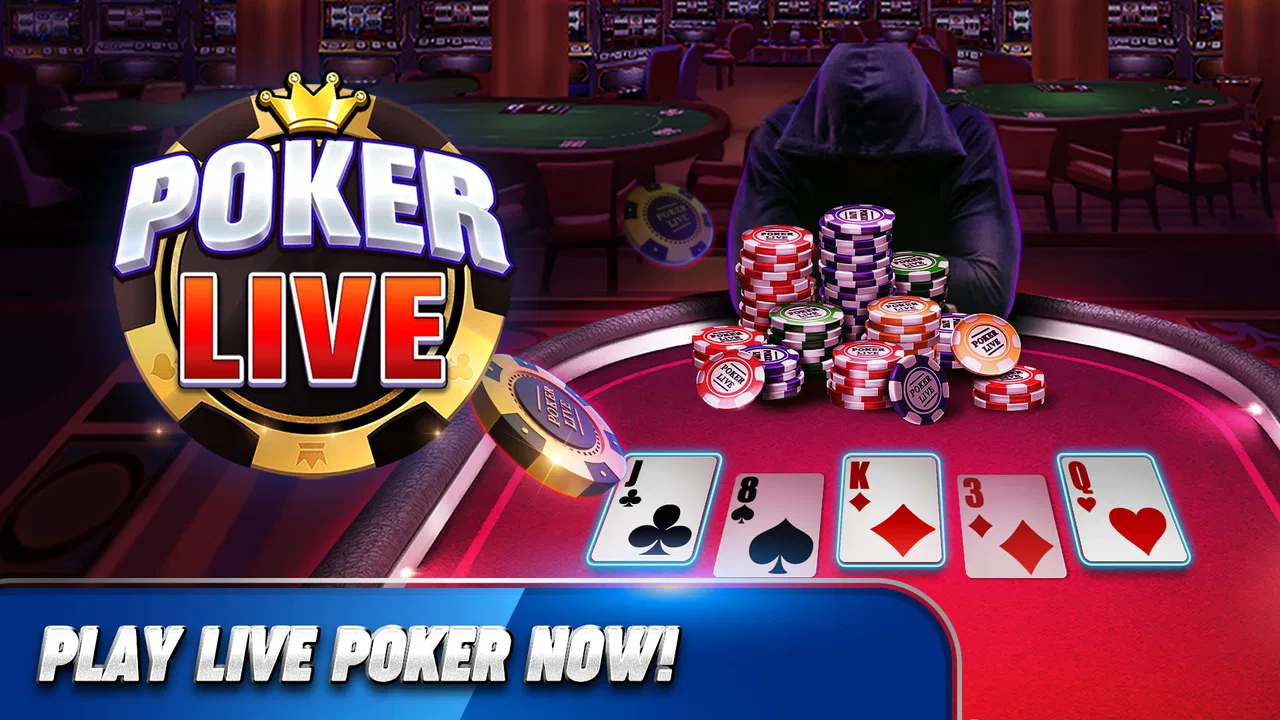
Poker Live: Texas Holdem Game
- 4.5
- Rating
- 1.00M
- Installs
- Free
- Price

 Analysis by App-foxy
I spent time with Poker Live: Texas Holdem Game to see whether it works as a practical way to play Texas Hold’em on a phone, rather than treating it as just another card game with a familiar name. My overall impression is positive: it is approachable, social, and easy to pick up when I want a quick poker session. At the same time, it is not the ideal choice for everyone. Players who want a quiet offline experience, a highly analytical poker trainer, or a clearly cash-free environment should think carefully before settling in.
The game is free to install, belongs to the card-game category, and comes from Interactive 360. Its audience is rated Teen, while optional purchases range from $0.99 to $99.99 per item. That combination tells me something important about how to approach it: the basic entry barrier is low, but I would still treat spending as a deliberate choice rather than an automatic part of playing.
How the current version feels in everyday play
The central appeal is straightforward. I can open the game, sit down for a round of Texas Hold’em, and focus on familiar poker decisions: whether to continue with a weak hand, how much pressure to apply, and when to fold before a small mistake becomes a larger one. That makes it suitable for short sessions, especially when I want interaction with other players instead of a solitary puzzle.
You May Also Like

 Blood Strike: 2.5 Anniversary
Blood Strike’s Loadouts Turn Every Drop Into a Tactical Gamble
A close look at Blood Strike’s custom loadouts: how fast access to signature weapons reshapes its battle royale rhythm, rewards preparation, and narrows the gap between fights.

 Pandora - Music & Podcasts
Pandora’s Music Is Easy to Start, but Harder to Recover
Pandora’s strength is its low-effort path from a seed to a station. Its weak spot is how much confidence it asks you to place in connection, setup, and quiet recovery.

 8 Ball Pool
 Is Built on Rivalries, Rematches, and Routine
A close look at the rivalries, rematches, shared routines, and unanswered safety questions that turn a quick pool match into a persistent mobile community.

 Samsung Music
’s Quiet Strength Is Playing What You Already Own
Its reach comes less from spectacle than from dependable access to a personal library. That simplicity is both the app’s strongest retention engine and its ceiling.

 AccuWeather: Weather Radar
AccuWeather Review: A Quick, Clear Forecast for Everyday Decisions
For everyday plans, the best forecast is the one you can understand quickly. AccuWeather makes rain timing, radar, and local conditions easy to act on, with a few trade-offs.

 Hill Climb Racing
Why Hill Climb Racing Still Turns Crashes Into One More Run
A tiny car, a bumpy hill and one more upgrade: Hill Climb Racing keeps resurfacing because its simple chaos makes every near-miss feel personal.
More From Our News Desk



The social angle matters here. Poker is more enjoyable when the table feels active, and the game is built around online play rather than presenting itself as a purely local card simulator. I would recommend it to someone who already understands the basic rhythm of Hold’em and wants a phone-based table to return to during spare moments.
For a newcomer, the first few sessions are best treated as practice in reading the table rather than as a race to win. The useful habit is to watch how the action develops before committing heavily. I found that the game’s value increases when I slow down, observe betting behavior, and separate a genuinely strong hand from the excitement of simply receiving two playable cards.
A realistic use case is an evening when friends are online at different times. Instead of arranging a full in-person game, I can use a mobile poker table for a few rounds, leave when my time is up, and return later. That flexibility is more convincing than the idea of playing continuously for hours. Short sessions make it easier to keep decisions thoughtful and avoid turning the game into background tapping.
The current release is version 1.10.15, and the app requires Android 8.0 or later. Those details make it reasonably accessible for people using an older but still supported Android phone. I would still check available storage, battery condition, and connection quality before a long session, because online card play is much less forgiving of interruptions than a game that runs entirely offline.
What the game does well for casual poker players
The strongest feature is the low-friction nature of the main idea. I do not need to learn an unfamiliar fantasy rule set or understand a complicated campaign before reaching the part I actually came for. The familiar Hold’em structure lets me concentrate on decisions and table awareness, which is exactly why mobile poker can work well as a quick social pastime.
It also has a useful middle ground between playing against a basic computer opponent and committing to a serious poker platform. An offline opponent can be convenient, but it often removes the unpredictable human element. A more specialized poker service may offer deeper tools and a more formal atmosphere. This game is more appealing when I want something lighter and more immediate than either extreme.
Another practical strength is that the game can suit different levels of attention. I can play actively by considering position, previous actions, and likely ranges, or I can use a short session simply to relax with familiar rules. The first approach gives the game more lasting value. The second is fine occasionally, but casual play becomes expensive in concentration if I start making impulsive calls just to stay involved in a hand.
My best tip is to decide on a session limit before opening the table. That limit can be based on time, attention, or a personal spending boundary. Because the game is free to start and includes optional purchases, setting that boundary in advance is more reliable than making a decision after a frustrating losing streak. The most useful discipline is choosing your stopping point before the cards choose it for you.
Small decisions that improve the experience
One non-obvious way to get more from the game is to treat each hand as information gathering. Instead of judging the session only by wins, I pay attention to which players enter pots frequently, who becomes cautious after a raise, and who appears willing to chase uncertain outcomes. That turns a quick phone game into a compact exercise in observation.
I also avoid playing while distracted by a conversation, a commute, or another demanding task. A missed action or rushed decision can change the result of a hand, and online play gives me less room to recover from divided attention. If I only have a minute, I would rather wait for a suitable break than join a table and make choices without thinking.
A second useful habit is separating entertainment value from skill improvement. The game can help me practice patience and basic hand selection, but it should not be mistaken for a complete poker course. If I want structured lessons, hand databases, detailed statistical review, or a controlled training environment, a dedicated poker-learning tool would be a better fit.
For friends who are new to Hold’em, I would explain the ranking of hands and the order of betting before inviting them into a serious session. The app’s accessibility does not automatically remove the learning curve. A beginner who understands why folding is often correct will enjoy the game much more than someone who believes every hand deserves a showdown.
What has changed and what that means for established players
The current version number shows that the game has progressed beyond its initial release, which arrived on February 26, 2021. That is relevant for people returning after a long break: they are not opening a brand-new experiment, but a product that has had time to move through multiple versions. I would still judge the present experience on its own terms rather than assuming that earlier impressions describe today’s build.
For existing users, the practical question is whether the current release still supports the reason they installed it. If that reason was quick online Hold’em with familiar rules, the core appeal remains easy to understand. A returning player should first play a few low-pressure sessions, check how comfortable the current interface feels, and only then decide whether it deserves regular use.
The game’s broad adoption also suggests that it has found an audience: it has passed 500,000 installs and holds a 4.6 average from roughly 21,000 ratings. I see those figures as signs of visibility and sustained interest, not as proof that every player will enjoy it. Ratings can confirm that many people like the general experience, but they cannot tell me whether the game matches my preferred pace, spending habits, or level of poker seriousness.
There are about 5,100 written reviews behind that public reception, which gives prospective players more community feedback to examine before installing. I would read recent comments with a specific question in mind: are people praising the actual table experience, or only describing the novelty of playing poker on a phone? That distinction helps separate lasting usefulness from first-session excitement.
The update history should also be viewed carefully. A newer version can improve stability or presentation, but it does not automatically transform a casual poker game into a professional analysis platform. My expectation is therefore modest and realistic: the current build should be assessed as a polished mobile way to play, not measured against tools designed for serious study.
Where the free model creates friction
The free starting price is convenient, but the presence of purchases requires self-control. The available items span from $0.99 to $99.99, a wide enough range that I would not browse the purchase area casually. Even if I never spend, the design of a free-to-play poker game can influence how often I return and how strongly I feel pressure to keep playing.
This is the point where I would be most cautious with younger players. The Teen content rating does not mean the game is unsuitable for every teenager, but it does make supervision and clear spending rules sensible. I would disable or protect purchasing access on a shared device and explain that virtual progress or resources should never be treated as a reason to chase losses.
Players seeking real-money poker should also understand the distinction between a mobile poker game and a regulated gambling service. I would approach this title as entertainment using its own in-game economy, not as a route to cash winnings. Anyone specifically looking for licensed real-money tables, formal identity checks, or jurisdiction-based gambling protections should choose a service built for that purpose instead.
Another limitation is the dependence on online interaction. The social element is the reason to play, but it can also be the reason a session feels less satisfying. If the tables are not lively at the moment I open the app, or if my connection is unstable, the experience loses much of its appeal. A traditional offline card game is a better choice when reliability and uninterrupted play matter more than human opponents.
I would also skip it if my main goal is deep strategic measurement. The game may encourage better instincts, but I would not install it expecting the kind of hand review, probability breakdown, or long-term performance tracking associated with dedicated poker software. For learning, I would pair it with a separate study method rather than asking one casual app to do both jobs.
Who should install it, and who should look elsewhere
I think it is a good match for casual players who already know the basics of Hold’em, enjoy online tables, and want a free way to try a few rounds from an Android phone. It is also reasonable for friends who want a shared poker activity without carrying cards or organizing a physical table. The format works particularly well when everyone understands that the goal is relaxed competition rather than financial gain.
It is less suitable for someone who dislikes competitive pressure, prefers offline games, or becomes frustrated by slow hands and unpredictable opponents. It is also not my first recommendation for a complete beginner who wants a guided course. A teaching-focused poker app would provide a clearer learning path, while a simple offline game would be calmer for people who do not want online interaction.
Compared with a standard solitaire or single-player card game, this title offers more social unpredictability but less control over pace. Compared with a serious poker platform, it is easier to approach but likely less useful for detailed study. Compared with a physical home game, it is more convenient and available at any time, but it cannot reproduce the same face-to-face atmosphere. That trade-off is the key to deciding whether it belongs on your phone.
Questions I would answer before downloading
If you are wondering whether you need a powerful new phone, the stated minimum is Android 8.0 or later, so the game is not limited to only the newest Android devices. I would still use a stable connection and keep the phone charged for longer sessions, because the online format is central to the experience.
If you are asking whether it costs anything to begin, the game is free to install. However, optional purchases are available, so I would set a spending limit before playing and avoid treating purchases as a solution to a losing run. The safest approach is to enjoy the core game first and decide later whether anything extra genuinely improves your experience.
If you are new to poker, you can still try it, but I recommend learning the hand rankings and basic betting order first. That small preparation prevents the most common beginner frustration: staying in hands without understanding what can realistically win. The game is more enjoyable when I see folding as a normal strategic action rather than a failure.
If you want to play without an internet connection, this is probably not the right pick for you. Its appeal comes from online poker, so I would choose an offline card game for flights, weak-signal areas, or quiet solo sessions. Likewise, if you want real-money gambling, look for a properly regulated service instead of assuming a free mobile poker game provides that experience.
Finally, if you are returning after a long absence, start with a short session in the current version rather than immediately spending money or committing to regular play. The build is 1.10.15, and the game has been available since 2021, but your decision should come from how the present tables, pacing, and economy suit you today.
My final view of the current release
I recommend Poker Live: Texas Holdem Game to the right kind of player: someone who wants accessible online poker, understands the basics, and can keep optional spending firmly under control. Its strongest quality is not complexity; it is the convenience of bringing a familiar social card game to a phone for short, flexible sessions.
I would not present it as a replacement for a serious poker study platform, a licensed real-money service, or a dependable offline game. Those alternatives are better when analysis, formal safeguards, or uninterrupted solo play are the priority. The game’s limitations become manageable once I choose it for what it actually does well rather than expecting it to cover every version of poker.
For me, the best way to use it is in brief sessions with a clear personal limit, paying attention to decisions instead of chasing every hand. The developer, Interactive 360, has maintained the title through multiple releases, and its audience response shows that the concept has found lasting interest. If you want casual online Hold’em with a social feel, it is worth trying; if you want poker education or serious wagering, choose a more specialized option.
FAQs for Poker Live: Texas Holdem Game
01What are the system requirements for Poker Live: Texas Holdem Game?
Poker Live: Texas Holdem Game requires iOS 11.0 or later for Apple devices and Android 5.0 or higher for Android devices. Make sure your device has sufficient storage space and is connected to the internet for optimal gameplay and updates.
02Is Poker Live: Texas Holdem Game free to download and play?
Yes, Poker Live: Texas Holdem Game is free to download and play. However, it offers in-app purchases for additional chips and premium features. These purchases are optional and enhance the gaming experience, but are not necessary for regular gameplay.
03Does Poker Live: Texas Holdem Game require an internet connection?
Yes, Poker Live: Texas Holdem Game requires a stable internet connection to function properly. This is because the game includes real-time multiplayer features, allowing you to play with friends or join games with other players globally.
04Can I play Poker Live: Texas Holdem Game with friends?
Absolutely! Poker Live: Texas Holdem Game allows you to invite friends to join your table. You can connect with friends through social media integration or invite them directly within the game to enhance your playing experience.
05What kind of security measures does Poker Live: Texas Holdem Game have?
Poker Live: Texas Holdem Game employs robust security measures to protect players’ data and transactions. The game uses encryption to safeguard personal information and offers secure in-app purchases to ensure a safe gaming environment for all users.
Pros
- Realistic gameplay with live players.
- User-friendly interface for easy navigation.
- Daily bonuses to enhance player experience.
- Wide range of tournaments and challenges.
- Responsive customer support team.
Cons
- Requires consistent internet connection.
- In-app purchases can be pricey.
- Occasional bugs in multiplayer mode.
- Limited customization of avatars.
- Ads can be intrusive during gameplay.

Poker Live: Texas Holdem Game
Gallery